Built Great Products But Can't Sell Them? Read This
Overview
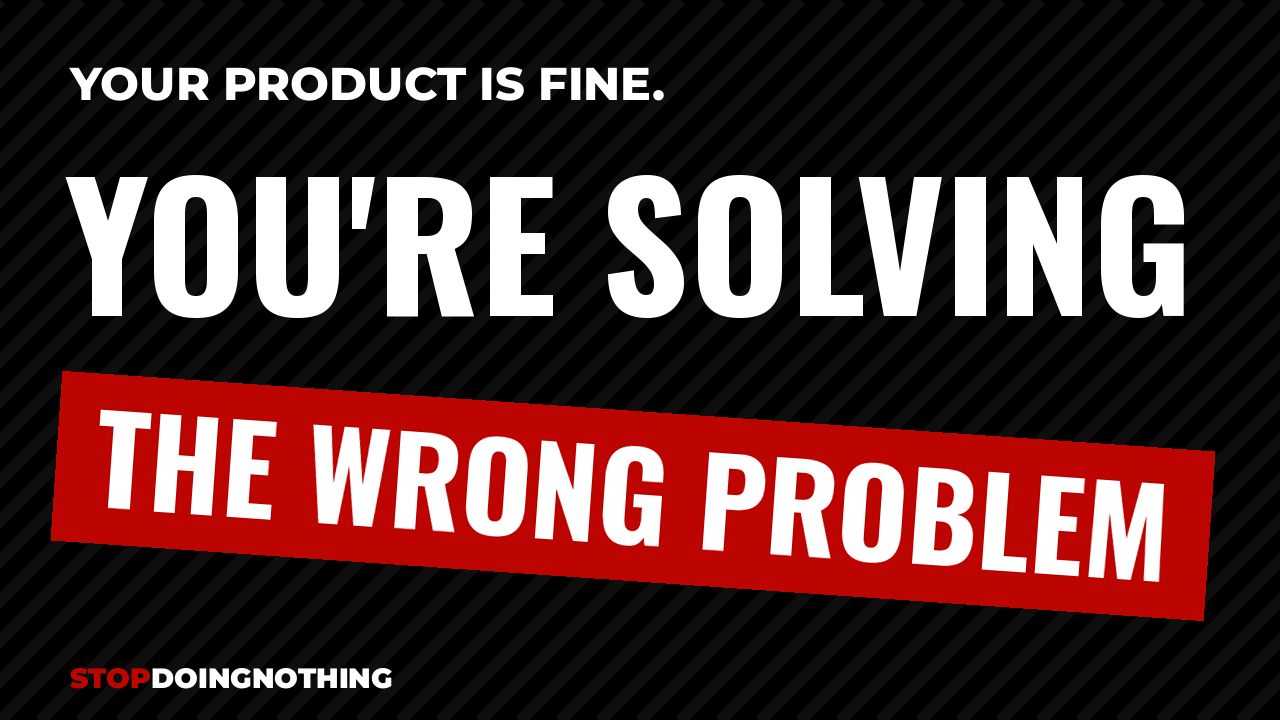
You can build a clever product, a beautiful website, or a stack of useful AI tools and still struggle to sell. That does not automatically mean you need another product, another marketing platform, or a more complicated funnel. It may mean you have started with your solution instead of the problem a specific person is desperate to solve.
In this article I'll make the case for a simpler starting point: solve one problem for one person, explain the value in that person's language, and charge well for a result that matters. I'll connect that focus to a bigger question of impact, then shows how AI can help you explore and organize an idea without taking ownership of it away from you. If you are a founder, consultant, agency owner, web designer, or builder with more ideas than sales, this is a practical reset.
Why This Topic Is Important
Builders are good at building. That strength can quietly become a trap. When one product is not selling, it is tempting to build a second product, add automation, create a cold-outreach agent, or bolt on a new platform. Those moves feel productive because they create something visible. But they can amplify the wrong message to the wrong audience.
The cost is not only wasted development time. A broad offer is harder to explain, harder for a buyer to recognize themselves in, and harder to price confidently. If your website says you can solve a dozen problems for anyone who asks, a prospect has to do the work of figuring out whether you can help. Most will not. A focused offer does that translation for them.
This is especially important now, when AI makes it easier to create products, websites, and content at high speed. Faster execution is valuable, but speed does not tell you whether you picked a problem people care enough to pay to solve. A tool can help you make more things. Only clear positioning can help a buyer understand why this thing is for them.
The upside of focus is practical: clearer conversations, sharper copy, stronger referrals, and a more direct path from a prospect's pain to your service. Instead of guessing at a dozen marketing tactics, you can test one promise with the people it is meant to help. That gives your work a better chance to become a business instead of a growing collection of unfinished offers.
More products are not the answer to an unclear offer
I ran into this recently on a social media post: someone had used AI coding tools to create several products, but is not making much money and does not know where to begin marketing. The quick replies were more technology: build a marketing system, create AI agents, automate cold outreach. My point is that this may treat the symptom while missing the cause.
If you do not know who should buy or what urgent problem the product solves, adding a marketing machine can simply help you do the wrong thing at greater volume. Before writing another sequence or building another feature, ask whether the offer is concrete enough for one person to say, “That's my problem, and I want that solved.”
A useful first audit:
Can you name the person you are trying to help without saying “everyone”?
Can you state the problem in words that person already uses?
Can you describe the change they will experience after working with you?
Can they see why your solution is a better next step than doing nothing?
If those answers are fuzzy, do not hide the fuzziness behind more software. Start by sharpening the offer.
Solve one problem for one person
The most direct business lesson is also the easiest to resist: solve one problem for one person. New entrepreneurs often try to solve many problems for many people because they fear narrowing the market will shrink the opportunity. In practice, broadening too early makes it harder for anyone to understand what you do.
A web designer, for example, can list dozens of capabilities: design, coding, search optimization, copy, integrations, and maintenance. A buyer is more likely to respond to a specific outcome tied to a specific need, such as helping a local dealership turn its inventory into a clear, search-friendly site that generates qualified inquiries. The capabilities still matter, but they support the promise instead of overwhelming it.
The same principle applies to an AI-built app, consulting package, course, or agency service. Start with a single buyer and a problem with real consequences. Learn what the buyer calls that problem. Build a solution that handles it well. Then explain the value in plain language and charge in proportion to the value you create.
This is not a command to stay small forever. I want to be clear that a focused starting point can grow into multiple offers or audiences later. Focus is how you earn the right to expand. Once one offer works, you have evidence, customer language, and a repeatable result to build from.
Put impact above strategy and tactics
Think about this in three levels of business thinking. At the most immediate level are tactics: the code, tools, pages, ads, and tasks used to do the work. Strategy sits above those tactics: the plan for using them to reach an objective. Above strategy is the impact or mission the organization wants to create.
The hierarchy matters because a tactic can be technically impressive and still be disconnected from the business that needs it. A polished website is not automatically a strategy. A strategy is not automatically meaningful if it does not connect to a real outcome for a real person. When you begin with the impact you want to have, you can judge whether a proposed tactic actually advances the mission.
I'm working on a concept called the "Impact Filter" to help people run their skills and tactics through that higher-level question and arrive at a clear solution for a specific person. The filter's eight lenses and teaching materials are still being worked out. Some of the possible versions of an IMPACT acronym, including “Interview, Map, Pick, Articulate, Craft, Tie”; “Identify, Mirror, Prioritize, Anchor, Close, Track”; and “Investigate, Mirror, Pinpoint, Announce, Commit, Transform.” These are exploratory options from the show, not a final, settled framework.
The practical takeaway is already useful: do not lead with your favorite tool. Lead with the result you want to create, choose a strategy that can produce that result, and then select tactics that fit.
Use AI to develop your thinking, not replace it
AI is a creative partner, not a substitute decision-maker. You should be taking a rough idea for a presentation and using an AI conversation to expand it, test language, organize the material, and explore how the idea might become a talk, a handout, a website, or even a paid service. You should be correcting the conversation when it drifts and pausing to assess whether the work is still heading somewhere useful.
That is the important operating pattern: bring the idea, ask better questions, review what comes back, redirect it, and make the choices yourself. AI helped me iterate and organize; he explicitly says it did not build the underlying philosophy for him. Your expertise, taste, experience, and responsibility still matter.
For a business owner, this can turn a half-formed concept into something testable. Ask an AI to interview you about the customer, the pain, the outcome, and the proof. Use the answers to draft a one-sentence offer or an outline. Then challenge the output against actual customer conversations. The tool can help you think more clearly, but buyers are the reality check.
Turn your idea into a real-world test
Here is a straightforward way to apply the episode:
Write down the one type of person you most want to help.
Describe one problem they actively want solved, using their words rather than your internal jargon.
State the practical change your solution creates.
Identify the smallest useful offer you can deliver exceptionally well.
Ask a few people who fit the description what they currently do about that problem and what a better outcome would be worth.
Use AI to help refine the wording or structure, but check every claim against real conversations.
Make one focused offer and learn from the response before building the next thing.
A clear offer is not a guarantee that every prospect will buy. It is a way to make sure the right prospects can recognize the value without decoding a list of features. That is a much stronger starting point for marketing.
Summary
If you have built a great product but cannot sell it, do not assume the next answer is more code, more products, or more automation. Step back. Identify the person, name the problem, and make the outcome unmistakable. Put impact above strategy and tactics, use AI to sharpen your thinking rather than surrender your judgment, and test the offer with real people. If you keep building for an undefined market, you can stay busy for a long time without creating a business buyers understand. Pick one problem and one person, then do the work to solve it well.
Click here to watch the LIVE YouTube version of this discussion.