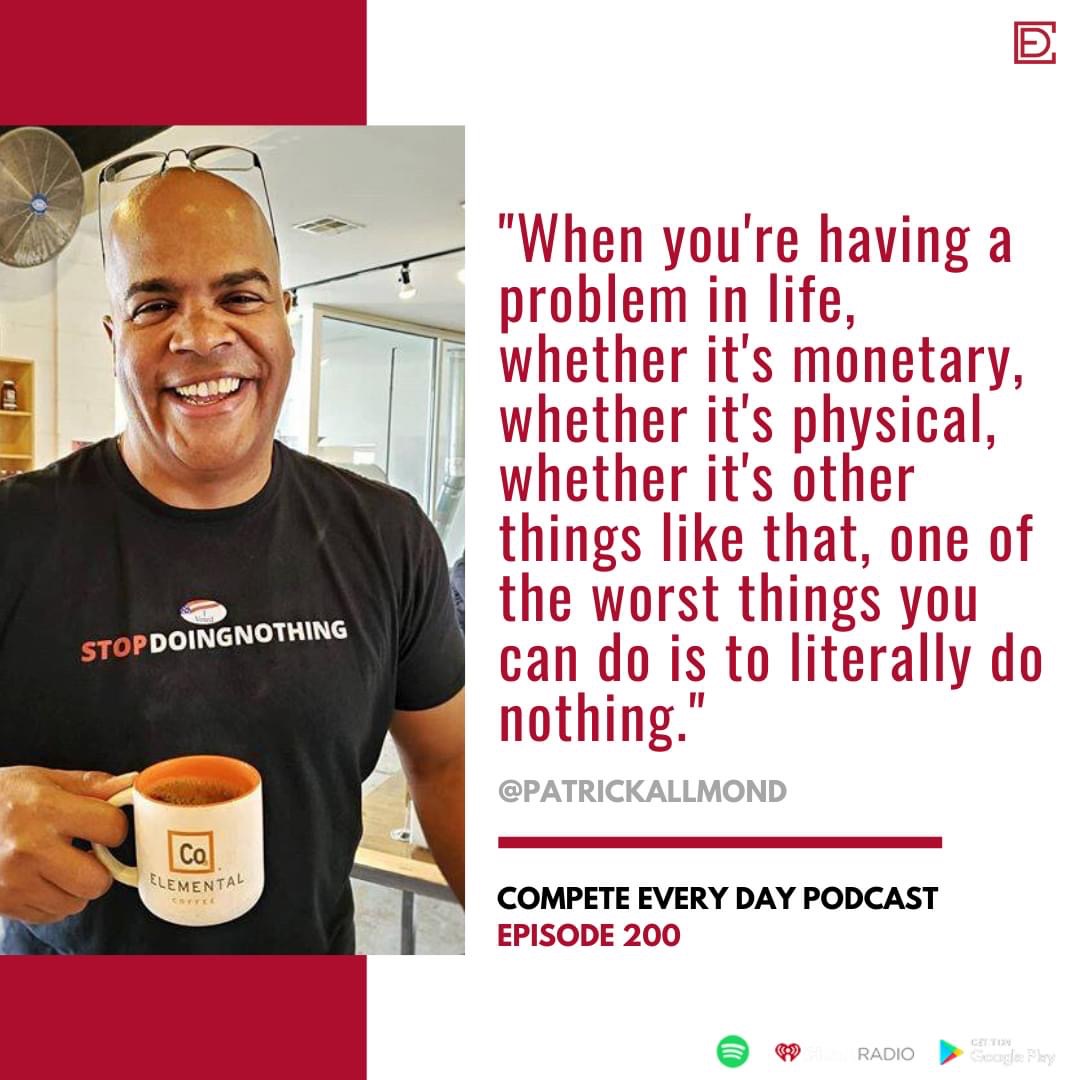
This Simple Tactic Can Make You Millions
This Simple Tactic Can Make You Millions
Overview
Most entrepreneurs waste far too much time trying to discover the perfect marketing tactic before they have earned the right to optimize anything.
They want the perfect platform, the perfect script, the perfect event, the perfect ad campaign, the perfect room, the perfect words, and the perfect timing. But the core lesson from this episode is much simpler than that: the people who eventually build reach, influence, and revenue are usually the people who show up more often, in more places, with more intention than everyone else.
That is the promise of this episode.
Patrick is not pitching a magic button or a secret algorithm. He is making a practical argument that serious business growth often comes from a deceptively simple tactic: put yourself in more rooms, create more opportunities to be seen, and build systems that turn casual attention into measurable commitment.
In plain language, that means stop depending on one channel, stop hoping that passive social posting will save your business, and stop treating visibility like a side hobby. If you want bigger outcomes, you need bigger reach. And if you want bigger reach, you need to show up online and offline in ways that give people a clear chance to raise their hand and step into your world.
This matters for agency owners, coaches, consultants, SaaS sellers, creators, speakers, local service providers, and almost anyone else whose income depends on being known, trusted, and remembered. The article below breaks the show into the practical ideas that make this lesson work in real life: networking, ads, webinars, in-person events, micro-commitments, tracking engagement, and building referral momentum.
The headline may sound bold, but the underlying idea is honest: a simple tactic can make you millions when you do it long enough, in the right places, with systems that compound attention into opportunity.
Why This Topic Is Important
This topic matters because too many business owners confuse visibility with marketing and activity with momentum.
They post in Facebook groups, update social profiles, comment on other people’s content, tweak headlines, and consume endless tactical advice. That can feel like movement. It can even look productive from the outside. But if all that effort never creates deeper engagement, then the business remains stuck at the level of casual attention.
That is the trap this episode tries to break.
Patrick’s central message is that marketing is not just about being present. It is about showing up in the right kinds of places with a clear path for people to engage further. That is a very different standard. It means the goal is not merely to be noticed. The goal is to create commitment.
Why is that so important now?
Because modern entrepreneurs are drowning in low-friction platforms. It has never been easier to start a YouTube channel, post on Facebook, create a Skool community, stream to multiple platforms, or publish an opinion online. But the low barrier to entry means everybody is doing it. That creates noise, weakens organic reach, and makes passive content far less reliable as a standalone growth engine.
At the same time, the people who do win are usually the ones who find a way to move their audience from passive awareness to active participation. They get the text opt-in. They get the webinar registration. They get the event attendance. They get the follow-up conversation. They get the referral introduction. They get into the rooms where trust builds faster.
That shift changes everything.
Once somebody gives more than a lazy like or a casual follow, the relationship starts to deepen. Once they give you a phone number, an email address, their presence at an event, or thirty minutes of attention, they are no longer just part of the crowd. They are beginning to enter your funnel, your ecosystem, and your influence.
This also matters because many people who should be growing faster are hiding behind free marketing. They tell themselves they are doing all the right things, but they are spending too much time at the shallow end. The result is frustration. They work hard, but the return feels random. They show up, but nobody commits. They publish, but the pipeline stays thin.
Patrick’s lesson is valuable because it moves the conversation out of vague motivation and into practical leverage. If you want reach, create more chances to be encountered. If you want sales, create more chances for people to self-identify. If you want scale, create systems that track who is leaning in.
And if you ignore this lesson, the cost is steep. You stay dependent on weak signals, weak platforms, weak reach, and weak follow-up. You spend months hoping that more posting will somehow create more business. Meanwhile, competitors who put themselves into real rooms, real funnels, and real commitment pathways quietly pass you.
This is why the topic is so important. The tactic may be simple, but the discipline behind it is what separates visibility from real business growth.
Main Points From the Show
1. The simplest growth tactic is to show up in more places with intention
One of the clearest ideas in the episode is that business owners need to put themselves in more environments where opportunity can happen.
Patrick frames this around in-person networking, but the principle is broader than that. Business growth often starts when you physically or digitally place yourself in contexts where the right people might encounter you. That means events, communities, webinars, collaborations, ads, live streams, meetings, introductions, and rooms where conversations can move naturally toward business.
The important part is not just attendance. It is intention.
He does not describe showing up as random socializing. He describes it as entering rooms ready to create outcomes. That is what makes the tactic powerful. You are not just wandering into a breakfast, a chamber meeting, or a webinar hoping magic happens. You are entering with clarity about what you want, what you offer, and how someone can take the next step.
This matters because most entrepreneurs dramatically underestimate the power of repeated exposure. They assume every event has to produce a client immediately. But in reality, showing up consistently creates a spidering effect. One event leads to one contact. That contact opens the door to another room. That room creates another invitation. That invitation produces a referral, a speaking spot, a client, a webinar, or a new group of warm prospects.
That kind of compounding is difficult to see when you are sitting at home only posting online.
A practical way to apply this idea:
- Put at least one intentional visibility activity on your calendar every week.
- Rotate across both online and offline channels instead of depending on just one.
- Decide before you arrive what the next step is that you want people to take.
- Treat each appearance as part of a larger network effect, not a one-off gamble.
The tactic is simple because it starts with showing up. It becomes powerful because most people do not do it consistently enough to let the results compound.
2. Marketing is spaghetti against the wall, but repetition makes the throw smarter
Patrick uses one of the strongest metaphors in the show when he describes marketing as grabbing a wet handful of buttery, garlic-filled spaghetti and throwing it against the wall.
That image works because it tells the truth about uncertainty.
- You do not always know which event will matter.
- You do not always know which ad will work.
- You do not always know which webinar topic will hit.
- You do not always know which partnership will turn into revenue.
That can be frustrating for new entrepreneurs because they want certainty before they start. But the episode flips that expectation. You are not supposed to know everything in the beginning. You are supposed to throw more spaghetti, observe what sticks, and get better with repetition.
Over time, the spaghetti gets better. You improve the offer. You improve the room selection. You improve your message. You improve the ad creative. You improve the follow-up. You improve the way you present yourself. Experience does not remove uncertainty, but it improves the odds.
That is a deeply useful mindset for business owners who freeze because they are afraid of wasted effort. Some effort will be wasted. That is not failure. That is the learning tax of entrepreneurship.
The real danger is not throwing imperfect spaghetti. The real danger is refusing to throw any at all.
A few application points from this metaphor:
- Stop waiting to know the perfect room before attending one.
- Stop waiting to know the perfect marketing channel before testing one.
- Stop judging a tactic too quickly before there has been enough repetition to learn from it.
- Pay attention to what sticks, then double down intelligently.
If you treat marketing as a long game of measured repetition, you stay in motion long enough to discover what actually works for your business.
3. Free visibility is fine, but commitment marketing is where the real money starts
One of the sharpest business lessons in the episode is the difference between passive visibility and active commitment.
Patrick is not dismissing free platforms. He uses social media, live streaming, content, and public posting. But he makes it clear that those channels often sit at the shallow end of audience commitment. A like is easy. A follow is easy. A group join is easy. A casual view is easy.
Those actions can matter, but they do not prove much by themselves.
What matters more is the moment somebody raises their hand and steps deeper into your world. That is why Patrick emphasizes tactics like webinar registrations, virtual events, ad-driven lead capture, text opt-ins, CRM forms, in-person event sign-ups, and measurable responses to a direct call-to-action.
These actions matter because they cost the prospect something small but meaningful: effort, attention, identity, time, or contact information. Once that happens, the relationship changes.
That is why commitment marketing is so powerful.
You stop guessing who is mildly interested and start identifying who is genuinely leaning in. You stop treating every impression as equal and start focusing on people who have taken a meaningful step. That lets you build better follow-up, better offers, and better sales conversations.
This is where many entrepreneurs leave money on the table. They celebrate reach without building the bridge from reach to action. They post and hope. They stream and hope. They show up and hope. But they do not create the mechanism that captures engagement while the interest is warm.
If you want the “simple tactic” to turn into serious revenue, you cannot stop at attention. You need systems that invite commitment.
4. Ads, webinars, and events work because they move people deeper into the funnel
Patrick is especially bullish on tactics that move a person from passive awareness into active progression.
Ads matter because they reach more people faster. Webinars matter because they require registration and attention. Events matter because they demand a stronger yes. Paid in-person events matter even more because they require time, travel, money, and effort.
These tactics are not magical because they are modern. They are effective because they force movement.
Someone who sees a Facebook post may forget you in seconds. Someone who fills out a lead form, registers for a class, shows up in a room, or attends a webinar for thirty minutes is telling you something very different. They are communicating interest with behavior, not just with a lazy digital reaction.
This matters because the deeper someone moves in your funnel, the more qualified they become. And the more qualified they become, the easier it is to sell, teach, serve, or partner with them.
Patrick’s thinking here is especially useful for people who sell expertise. If you teach, coach, consult, speak, or provide services, you need opportunities where people can experience you beyond a social scroll. Ads can create that. Webinars can create that. Workshops can create that. In-person rooms can create that.
And these tactics can layer together:
- Ads drive sign-ups.
- Sign-ups create CRM records.
- CRM records drive reminders and follow-up.
- Attendance creates a new level of engagement.
- Engagement creates a stronger offer opportunity.
- Offers create revenue.
That is how reach becomes money.
The lesson is not “run ads because ads are cool.” The lesson is “build a sequence where every step asks for a little more commitment and reveals who is actually serious.”
5. Micro-commitments tell you who is worth following up with
One of the smartest parts of the episode is the emphasis on small behavioral signals.
Patrick talks about tracking micro steps: opening the email, clicking a link, registering for the event, attending the webinar, staying in the room, and continuing to engage. This is where modern marketing becomes much more intelligent.
Most business owners follow up too broadly or too weakly. They treat every lead the same. But not every lead is the same. The person who casually follows you is not the same as the person who clicked five links, registered for a session, and stayed for forty-five minutes.
That second person is waving a flag.
Micro-commitments matter because they reveal intent before a sale happens. They help you know who is warming up, who is just browsing, who is highly engaged, who is close to action, and who deserves stronger follow-up and direct outreach.
This is also where CRM systems become powerful. If your systems can capture and score these signals, you stop operating from gut feel alone. You can identify the people who are most likely to buy, book, refer, or respond.
For service businesses, that is huge. It means your energy stops getting wasted on the least committed people. Instead, you can focus attention where the probability is higher.
The broader lesson is simple: not all attention is equal. Measure the signals that show someone is stepping closer.
6. Referral partners and room-to-room selling can multiply your reach faster than solo effort
Toward the end of the episode, Patrick highlights another major growth lever: do not just sell to the room. Sell through the room.
That is a powerful distinction.
Many people walk into a networking room hoping one person there will buy. That can happen. But the bigger play is often finding the people who can introduce you to their audience, refer you repeatedly, invite you to speak, connect you to other rooms, or become ongoing distribution partners.
This is where the simple tactic gets much bigger.
If you show up to one room and one person introduces you to another room, and that second room creates a webinar, and that webinar feeds your CRM, and that CRM creates sales conversations, you are no longer working linearly. You are working exponentially.
This is especially effective when you find complementary partners:
- people who serve the same audience from a different angle
- people whose clients naturally need what you offer next
- people with trust already built in rooms you want access to
- people who can become affiliates, referral partners, or event collaborators
Patrick’s point here is strategic. Sometimes the real value of the room is not the buyer sitting in front of you. It is the connector sitting beside you.
That is why entrepreneurs need to train themselves to look for leverage, not just transactions.
Who can open doors? Who can invite you to speak? Who can refer you? Who can partner with you? Who already has the audience you want to help?
When you start thinking that way, the simple tactic of showing up turns into a real engine for multiplied reach.
Summary
If you want bigger business results, do not wait for a perfect tactic to appear out of nowhere. Start with the simple tactic that too many people ignore: show up more often, in more rooms, with more intention, and with a system that gives people a way to raise their hand. That is how reach grows. That is how trust builds. That is how opportunities spider out. That is how marketing moves from random posting to measurable momentum.
Ignore this lesson and you will keep mistaking passive visibility for real growth while stronger competitors build pipelines from attention, commitment, and partnerships. But if you apply it, you can turn rooms into referrals, ads into attendees, attendees into leads, and leads into serious business. Watch the full episode on YouTube and listen to the podcast to go deeper, then ask yourself one practical question: where can you throw more spaghetti this week in a way that gives the right people a real chance to step into your world?