How To Simplify Your Business Life & Keep Your Sanity
Simplify For Your Sanity: Why Doing Less (Better) Will Make You More Money
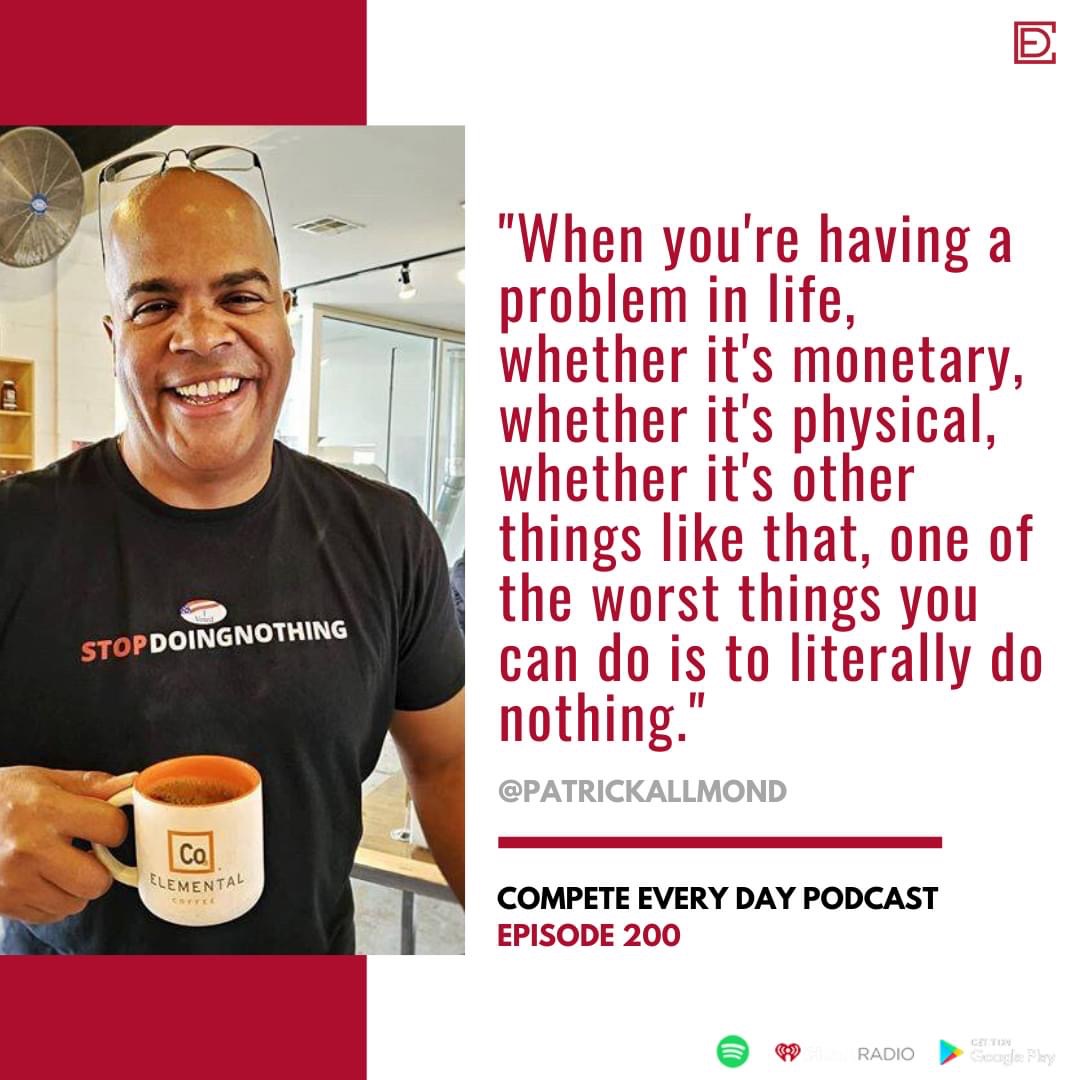
Somewhere between "start a business because you're good at one thing" and "wake up on a random Wednesday morning staring down 16 hours of to-dos crammed into an 8-hour day," something went sideways. It happens to almost every entrepreneur, and it happened to Patrick Allmond, founder of Stop Doing Nothing Media in Oklahoma City. Not because he's lazy, not because he's disorganized - because he did the thing every ambitious business owner does: he said yes to everything, chased every dollar, and slowly, quietly, buried his own sanity under a pile of "opportunities."
This isn't a theory piece. This is a field report from someone actively going through the process of ripping his business back down to the studs and rebuilding it simpler, leaner, and more profitable. And he's not holding back on what he's learned.
Here's the hard truth up front: simplification does not mean shrinking your business. It doesn't mean making less money. It doesn't mean playing small. It means reorganizing, refocusing, and rethinking what you're actually doing with your time, your pricing, your tools, and your client list -so you can stop drowning and start scaling. If you're running a $10,000-a-year side hustle or a $10-million agency, the chaos creeps in exactly the same way. Slowly. Silently. Until it takes over.
This post breaks down the entire simplification framework, point by point, no fluff, no sugar-coating. Read it, steal it, and start cutting.
Why This Topic Matters (More Than You Think)
Most business advice out there tells you to add - add another revenue stream, add another service, add another platform, add another tool. Almost nobody tells you to subtract. And that's exactly why so many entrepreneurs feel like they're sprinting on a treadmill that keeps speeding up: they're doing more advice-following than most people ever will, and they're still exhausted, still overwhelmed, still not making the money they should be making for the hours they're putting in.
Complexity is a silent tax on your business. Every extra service you offer, every extra niche you dabble in, every extra tool you bounce between, every extra hour you make yourself "available" - all of it drains focus, drains energy, and drains profit. And it happens gradually enough that you don't notice until you're the guy staring at a to-do list that would take two people to finish.
The businesses that win long-term aren't the ones doing the most things. They're the ones doing the fewest things, exceptionally well, for the right people, at the right price. That's not a hot take - it's the entire premise of this framework, and it's worth taking seriously if you want to keep your business AND your mind intact.
Point #1: Un-Niche Yourself Back Into a Niche
Here's how it happens. You're good at something - call it Niche A. Then someone dangles good money in front of you for something adjacent - Niche B. You take it, because money is money. Then Niche C shows up. Then D. Before you know it, you're the person at the networking breakfast standing up and saying, "My name is Joe Bob Smith, and I do this, but I also do this, and this, and if you need help with this too..."
And once you're past two niches, you don't have a niche anymore. You have a general practice. And general practices don't command premium prices, don't build strong reputations, and don't create referral machines the way deep specialists do.
Chasing money is the #1 cause of un-niching. It feels smart in the moment ("more revenue streams = more security"), but it dilutes your expertise and your positioning.
The fear of being a "one-trick pony" pushes people to diversify prematurely. That fear is natural - but it's usually wrong. Depth beats breadth almost every single time in business.
The "guru lifestyle" is a trap. Watching someone with 500,000 followers doing five different things makes it look glamorous and achievable. It's neither. It's usually the result of years of built authority in ONE thing first.
Diversification is great for your investment portfolio. It is often terrible for your business. Those are two completely different games with two completely different rules.
Go narrow and deep, not wide and shallow. One area, mastered, beats five areas, dabbled in - every time.
If you've caught yourself drifting into three, four, or five "specialties," this is your permission slip to pull back. Un-diversify. Go deep in one lane again.
Point #2: The Four Things People Will Always Pay Well For
This is the foundation everything else in this framework builds on. Whatever industry you're in - marketing, fitness, web design, plumbing, coaching - there are exactly four things people will consistently pay premium money for:
Simplification. When you niche down and become excellent at one specific thing, people will pay you well to make something simple that used to feel complicated to them.
Speed. If you can get someone a result faster because you're a genuine expert, that speed has enormous monetary value. Think about how much someone struggling to lose weight for years would pay to get real results in months instead.
Pleasure. People pay extra for things that feel good - that's the entire reason first-class airline seats and early boarding exist. It's not about the destination; it's about the experience of getting there.
Pain avoidance. The flip side of pleasure - people will pay well to avoid discomfort, hassle, embarrassment, or risk.
Memorize these four. Every pricing decision, every service offering, and every piece of marketing copy you write should be filtered through simple, speed, pleasure, and pain avoidance. If your offer doesn't hit at least one of these, it's going to be a hard sell no matter how good it actually is.
Point #3: Cap Your Services and Prices at One to Three
This is the KISS method in action - Keep It Stupid Simple. Trying to sell general consulting or five different services to please everyone (the $5 amateur, the $49 mid-tier client, and the $5,000 premium buyer) is a fast track to burnout and mediocrity.
Get down to one to three service offerings. Ideally, one core service offered at three different price levels - good, better, best.
Good-better-best pricing eliminates the estimate back-and-forth. No more hemming and hawing over custom quotes. Someone comes to you, sees the pricing tiers, and picks one. Simple.
You can still have a "mega" offering in your back pocket. If someone wants more of the same thing at a bigger scale (not a totally different service - more of what you already do), that's fine to accommodate.
This approach is especially powerful for startups and mid-range businesses. These aren't rigid rules for every business at every stage, but if you're still building your foundation, this structure will save your sanity.
Selling one thing extremely well beats selling five things adequately. Every time.
Point #4: Stop Trying to Master Every Tool on the Market
If you're the type of person who gets excited by shiny new tech - and a lot of ambitious entrepreneurs are — this one is going to sting a little. It's meant to.
New AI tools, new social platforms, new project management software: they show up constantly, and the temptation to chase every single one is enormous. Resist it.
Pick one AI platform and go deep. Not shallow familiarity with five different tools - real, functional mastery of one. In this case, that's Claude and the Anthropic ecosystem. Not because the others are bad, but because depth in one tool beats surface-level dabbling in five.
Watch what happens in AI communities every single day: someone posts "is this the best one?" and jumps ship the second a competitor offers free tokens. That constant model-hopping is a massive time and productivity drain - and it never actually makes anyone better at using AI.
The same logic applies to your business tools. Years of testing project management platforms — the Mondays, the Asanas - eventually led back to ClickUp every single time. Consolidate around what works and stop shopping around out of boredom or FOMO.
Bouncing between tools doesn't just cost you time — it costs your team their sanity too. Constant tool-switching from leadership creates chaos for everyone who has to keep relearning new systems.
Pick your lane. Get good. Stay there.
Point #5: Build a Self-Service Offer for the People Who Aren't Your Ideal Client
Not every prospect is going to be a fit for your premium, high-touch offering - and that's okay. The mistake is trying to personally serve every single person who reaches out, regardless of budget or fit.
If your core service starts at $5,000 and someone shows up with $200, you don't need to say no to them entirely - you need a different offer for them. A course, a template, a self-service product they can use to solve their own problem.
This keeps your personal time and headspace reserved for the clients who actually deserve it. A $200 project shouldn't consume the same mental energy as a $20,000 one.
This applies far beyond web design or marketing. Whether it's artwork, teaching a skill, or any service-based business, having a lower-cost, self-directed option protects your time while still serving people at every budget level.
Build the ladder. Let people climb it at their own pace - without pulling you down to the bottom rung with them.
Point #6: Cut Low-End Clients and Raise Your Prices
This is where a lot of business owners get uncomfortable, and it's exactly why it needs to be said directly: higher-end clients are more profitable, complain less, and care less about micromanaging your process. They just want it done.
Test it yourself. Do a $200 project for someone, then do a $20,000 project for someone else. The difference in the client experience - the nagging, the complaints, the scope creep — is night and day.
If you're currently charging $500–$1,000 for something like web design, consider making your new base price $5,000. Yes, that will eliminate a chunk of your current prospect pool. That's the entire point.
Doubling or tripling your prices is one of the single easiest ways to protect your mental health and your finances at the same time. Fewer clients, higher quality relationships, dramatically better margins.
Premium pricing isn't about greed - it's about sustainability. You cannot run a healthy business, and you cannot stay sane, serving high volumes of low-margin, high-maintenance clients indefinitely.
If premium pricing feels scary, that's normal. It's also usually the single highest-leverage move available to a business owner drowning in low-value work.
Point #7: Restrict Your Availability - Ruthlessly
Time management is simplification too, and this is one of the most practical, immediately actionable pieces of the whole framework.
Stop making yourself available five days a week, eight hours a day, for meetings. That was the old habit - even including Saturdays at one point - and it left zero room for deep work.
Now, meetings are only bookable Monday through Wednesday, and only during specific windows — not even all day during those days. The rest of the time is protected for mentor work, technical work, planning, content creation, and internal meetings.
Internal meetings still happen - Thursdays, for example - but they're not publicly bookable. There's a clear line between time reserved for the business and time available to the outside world.
This isn't about being unreachable or acting self-important. It's about protecting the hours needed to actually do the deep, valuable work that makes the business worth running in the first place.
You do not owe every prospect, client, or stranger unlimited access to your calendar. Guard your time like it's the finite resource it actually is — because it is.
Point #8: Resist the Urge to Chase Money Outside Your Lane
This one takes real discipline, especially early in a business when every dollar feels critical.
When someone offers a big chunk of money for work outside your niche, have the mental fortitude to say no. "I don't do that. I'm not great at that. I don't care how good the money is." That sentence is hard to say and even harder to mean - but it protects your focus.
There's a middle path for some people: take the money and subcontract it out. That works if you have the systems and partners to do it well - but it's a different strategy entirely from doing the off-niche work yourself.
Taking every dollar that comes your way is one of the fastest ways to destroy the sanity you're trying to build. It's tempting, especially when bills are due, but it's a trap that keeps expanding your scope in the wrong direction.
Every "yes" to off-niche work is a "no" to getting deeper and better at the thing you're actually supposed to be known for.
Point #9: Don't Bend to Accommodate Clients - Lead Them Instead
This might be the most important mindset shift in the entire framework, because it's about protecting your expertise, not just your schedule.
When a client insists on their own process, their own tools, their own methods - and you're tempted to just go along with it for the money - stop. That client is usually not the expert in your field. You are.
Use those moments as an opportunity to lead. Something like: "I know you want it done this way, but this isn't my first rodeo. Let me show you how I'd do it - it'll be cheaper and faster." They might say no. That's fine.
Protecting your process protects your integrity. Even if you lose the client, you keep your expertise intact, and you keep your ability to sleep at night with a clear conscience.
Clients hire you because you know something they don't. The moment you abandon your expertise to please them, you've abandoned the entire reason they hired you in the first place.
Point #10: Give Back Through Training - But Stay Narrow and Deep
Every industry has newcomers who don't yet know the basics, and every experienced professional has, at some point, felt the urge to be a little sarcastic about it. That's natural. The better move is turning that frustration into opportunity.
If you've done any trade for six months, a year, or five years, you have knowledge someone else desperately needs. That's true whether you're in digital marketing, woodworking, automotive repair, lawn care, or plumbing.
Building training content in this era is easier than it's ever been. It doesn't have to be monetized — it can be as simple as sharing quick videos or tips online.
The key is going narrow and deep with your training, not wide and shallow. Teach the thing you know cold, not a broad overview of everything adjacent to it.
This isn't a separate strategy from the simplification framework - it's an extension of it. The same depth-over-breadth principle that protects your business also makes your teaching more valuable.
Point #11: Give Yourself Permission to Suck at Things
The final piece is more mindset than tactic, but it might be the one that ties everything else together.
You don't have to know everything. In a world of AI, tools, platforms, and endless "best practices" content, it's genuinely okay to be excellent at one thing and mediocre - or outright bad - at everything else.
Being deliberately mediocre at things outside your lane is a feature, not a bug. It's the natural consequence of going deep instead of wide - you literally cannot be great at five different disciplines at once.
This permission is what makes all the other points possible. Un-niching, tool consolidation, premium pricing, and restricted availability all require accepting that you will say no to things - and being fine with that.
The Bottom Line: Keep It Simple, Keep Your Sanity
Here's the reality nobody wants to admit when they're starting a business: complexity doesn't announce itself. It doesn't show up on day one and tell you it's going to slowly consume your calendar, your pricing, your client list, and your peace of mind. It creeps in one "yes" at a time - one extra niche, one extra tool, one extra low-paying client, one extra hour of availability - until years later you're staring at a to-do list built for two people and wondering how you got there.
The fix isn't complicated, even if it's hard. Pick one niche and go deep. Remember that people pay well for simple, speed, pleasure, and pain avoidance - and build your offers around those four things. Cap your services and prices at one to three, with good-better-best tiers that end the estimate back-and-forth for good. Pick your tools and stop shopping around. Build a self-service ladder for the people who aren't ready for your premium tier, and then cut the low-end clients dragging down your margins and your mental health. Guard your calendar like the finite resource it is. Say no to money that pulls you outside your lane. Lead your clients instead of bending to them. Teach what you know. And give yourself full permission to be average - or bad - at everything else.
None of this shrinks your business. It sharpens it. It's the difference between running in twelve directions at once and running hard in one direction that actually gets you somewhere. Simplification isn't the safe, timid choice - it's the aggressive one. It takes real courage to say no to easy money, fire clients who are dragging you down, and narrow your focus when every instinct says to expand. That's not playing small. That's playing to win.
If any part of this hit home - and if you're the kind of entrepreneur who's ready to stop drowning in complexity and start building something leaner, more profitable, and genuinely sane - don't stop here. This post only scratches the surface of everything covered in the full episode. Go watch the complete show on YouTube at Stop Doing Nothing, or subscribe to the Stop Doing Nothing podcast wherever you listen - search Patrick Allmond or Stop Doing Nothing on your podcast app. Hit subscribe, hit follow, and get the full, unfiltered version of this conversation, delivered live every week. Your business - and your sanity -- will thank you.